
Questions? contactus@blockharbor.io
Security test cases for ECUs, written by AI
Your ECU has custom diagnostics. Off-the-shelf security tests miss them.
Our AI connects to the real ECU through a Raspberry Pi and writes security test cases for what it finds there. Your engineer stays in charge the whole way.
Request beta accessWe reply by email to scope your ECU.
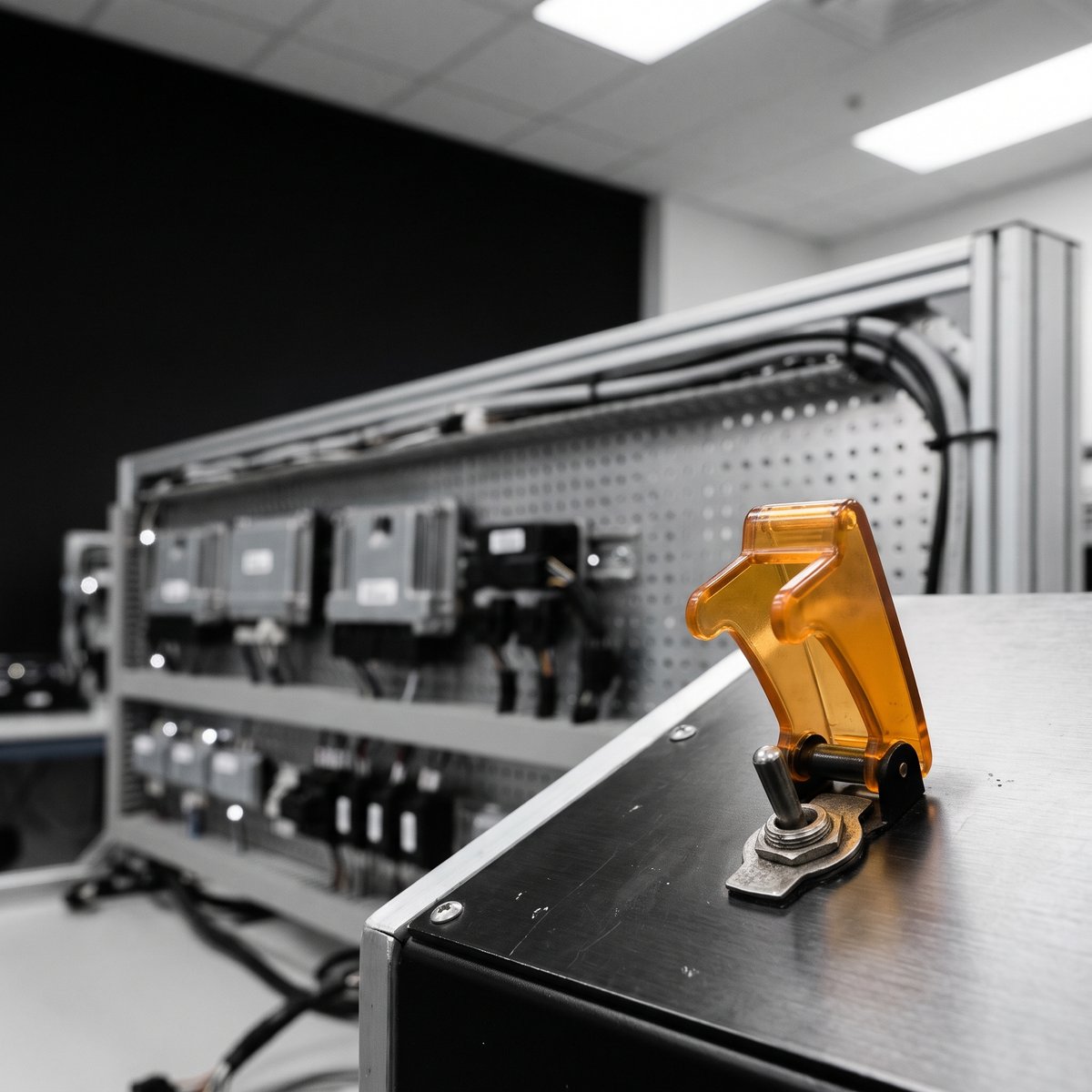
Runs on the real ECU, on your test bench
The ECU never leaves your lab
No new rig: a Raspberry Pi and the adapter for your ECU
Why a test library falls short
- On a real ECU, discovery often turns up the maker's own diagnostic services alongside the standard commands a generic test case expects. A library can't know those in advance.
- Each of those services needs its own test case, written by someone fluent in the diagnostic protocol and in security testing. That is usually a specialist, so the work waits until one is free.
- Tools that test on their own hand you results nobody on your team checked, and those are hard to stand behind in a design review.
How it works
01
Connect
Wire a VSEC Bench, a Raspberry Pi flashed with the image VSEC generates, to the ECU on your test bench. It comes online in about 10 minutes, and the ECU stays where it is.
02
Map
Through the Bench, the AI runs discovery, finds the diagnostic servers that accept input and reads the bus speed. Then it tells your engineer what it found, including any trouble with the test bench itself.
03
Write and decide
The AI writes test cases for the services it found, such as attempts to get past diagnostic security access, runs them and reports the results. Your engineer reviews each one and keeps the ones worth re-running on every new software build.
Does the AI run tests without us?
No. It works inside your engineer's session, not on its own. Within that session it runs discovery, writes test cases, runs them and reports what it sees, including problems with the setup: in one run, it flagged frame errors while the bus was down. We believe an engineer should own every test plan, so your engineer reviews what the AI wrote and decides which test cases to keep.
See how remote ECU testing on a Raspberry Pi works →What happens next
AI test case writing runs in business workspaces, not on our self-serve VSEC platform, as part of our beta program.
- 1Send the form with the ECU you want to test.
- 2We reply by email to scope the ECU, its interfaces and your test bench.
- 3We set up a business workspace with the AI connected, ready for your first Bench.
What hardware do we need?
A Raspberry Pi 3, 4 or 5 (a 4 or 5 with 4 GB of RAM or more is recommended), flashed with the image VSEC generates, plus the adapter for your ECU's interface, such as a CAN (Controller Area Network) adapter. The ECU stays powered on your own test bench. We sell no hardware.
Do we need a security specialist on the team?
Not to start. The AI draws on our own automotive protocol specifications, and your engineer brings what they know about the ECU. If you'd like an expert to look at a finding, our testers can reach the same Bench remotely.
Request beta access
Tell us which ECU you want to test.